Beyond the Diagnosis: Remembering Alexus
By TJ Edmund
For Trinity, SMA Awareness Month carries a different meaning this year.
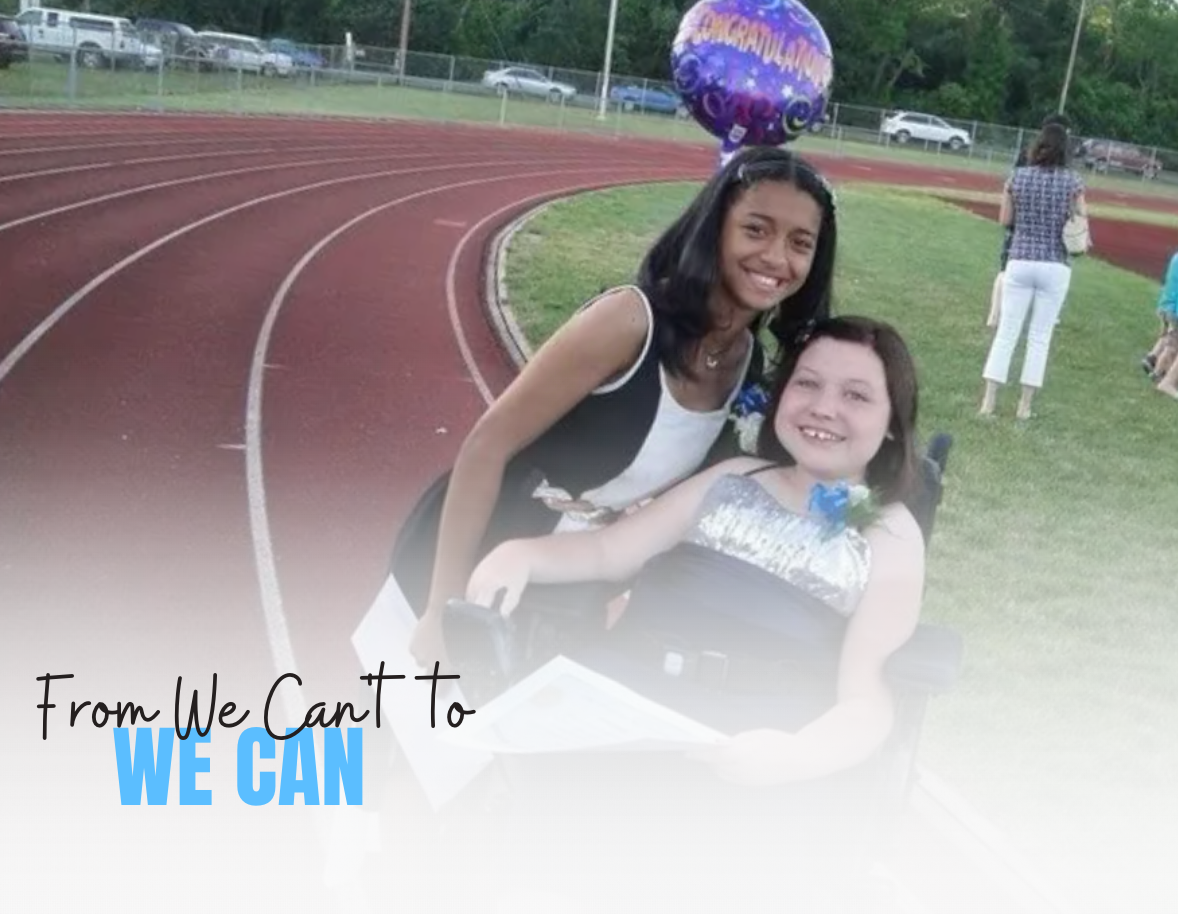
Her best friend Alexus, who lived with spinal muscular atrophy (SMA), died in April. In the months since, memories of their friendship have taken on another layer of meaning– including the ways Alexus helped Trinity understand disability through knowing her as a person, rather than simply through her diagnosis.
That personal connection gives August's awareness efforts a place to begin: with a friendship and a person remembered for much more than SMA.
Spinal muscular atrophy is a genetic condition that affects the motor nerve cells in the spinal cord and can cause progressive muscle weakness. Its effects vary from person to person and can include challenges with movement, breathing and eating. SMA can affect people at different stages of life, from infancy through adulthood.
For families and individuals living with SMA, the condition can shape everyday life in ways that are both visible and unseen. Access to medical care, adaptive equipment, transportation and other resources can play an important role in helping people participate fully in their communities.
August has become an opportunity to bring those experiences to light.
A History of Advocacy
SMA Awareness Month dates back to 1996, when Families of SMA, now Cure SMA, established August as a month dedicated to increasing awareness of the condition. The effort grew from years of advocacy by families seeking greater understanding, research and support for people living with SMA.
That advocacy has been part of significant changes in how SMA is diagnosed and treated.
In 2016, the U.S. Food and Drug Administration approved Spinraza (nusinersen), the first FDA-approved treatment for SMA. Other treatments, including gene therapy and oral medication, have since followed.
Newborn screening has also expanded. In 2024, all 50 states were screening newborns for SMA, an advance that can allow babies with the condition to be identified and treated earlier.
Those developments reflect decades of work by researchers, clinicians, families and people living with SMA who pushed for greater attention to a rare condition.
The history also reflects something familiar throughout the disability community: change can begin when people share their experiences and ask others to listen.
Seeing the Person Beyond the Diagnosis
Disability awareness can begin with learning the terminology or understanding a diagnosis. It can become more meaningful when that knowledge is connected to a person.
For Trinity, Alexus was that person.
Their friendship gave Trinity an opportunity to get to know Alexus beyond the medical language surrounding SMA. She knew her as a friend – someone with her own personality, interests, humor and experiences.
That distinction matters.
Disability is discussed through statistics, diagnoses and lists of challenges. Those details can help explain a condition, but they cannot tell someone's entire story.
People with disabilities build friendships and families, develop interests, hold aspirations, celebrate milestones and experience the ordinary moments that make up everyday life. They also encounter barriers that can make those ordinary experiences more difficult, from inaccessible spaces and transportation challenges to gaps in services and support.
Knowing someone personally can change how those barriers are understood and tackled.
It can make accessibility feel less abstract. It can turn a statistic into a familiar face. And it can challenge assumptions about what a person with a disability can or cannot do.
For Trinity, that understanding came through friendship.
Why Awareness Still Matters
There have been significant advances in SMA research and treatment, but awareness remains part of a much larger conversation.
Rare conditions can be difficult for the public to recognize or understand. Greater awareness can help families find information and resources while encouraging communities to think more intentionally about accessibility and inclusion.
The history of SMA advocacy shows how sustained attention can contribute to meaningful change. Families and advocates have spent decades raising funds, supporting research, sharing their experiences and pushing for improvements in diagnosis, treatment and support. Cure SMA continues that work through research, care and support programs, advocacy and public education.
Awareness also has a more personal role. It can encourage people to listen to individuals with disabilities, learn from their experiences and recognize barriers that may otherwise go unnoticed.
For Trinity, that lesson is connected to someone she knew and cared about deeply Alexus is no longer here to tell her own story, but the friendship they shared remains part of Trinity's.
This year, SMA Awareness Month gives Trinity an opportunity to remember Alexus while helping others understand the condition she lived with. It also offers a reminder that awareness does not have to begin with statistics or a medical definition.
Sometimes, it begins with knowing someone.
And sometimes, when that person is gone, their legacy continues through the people who remember them.
Sources and Links
You may want to read more of our blog...
We Can Blog